HOME > Rhinoplasty Center > Revision
NOSE CENTER
Starting from an accurate diagnosis ANSWER Nose Revision
We analyze the cause of the previous surgery and systematically correct contracture, asymmetry, and implant problems.
Duration
2–3 hours
Anesthesia
Sedation
Hospitalization
Same-day discharge
Stitch Removal
5–7 days
Recovery
Daily life in about 2 weeks
ANSWER Revision
Because tissue conditions are more complex in revision rhinoplasty than in a first surgery, finding why the result was unsatisfactory comes first. ANSWER Plastic Surgery precisely diagnoses the cause of problems such as contracture, implant deformation, and asymmetry, then builds a revision plan suited to the remaining tissue.
When Revision is needed
If any of the following apply to you, we recommend a specialist consultation.

Nose turned up by contracture
Capsular contracture around the implant has pulled the tip upward, making the nose look short
Visible or mobile implant
The implant outline shows through the skin, or it feels loose to the touch
Deviation or asymmetry
The nose has shifted to one side, or the bridge and tip line are misaligned after surgery
History of inflammation or infection
Repeated inflammation at the surgical site requires implant removal or replacement
Unnatural shape
The bridge feels too high or too low to harmonize with the rest of the face
CUSTOM DESIGN
Revision design based on cause analysis
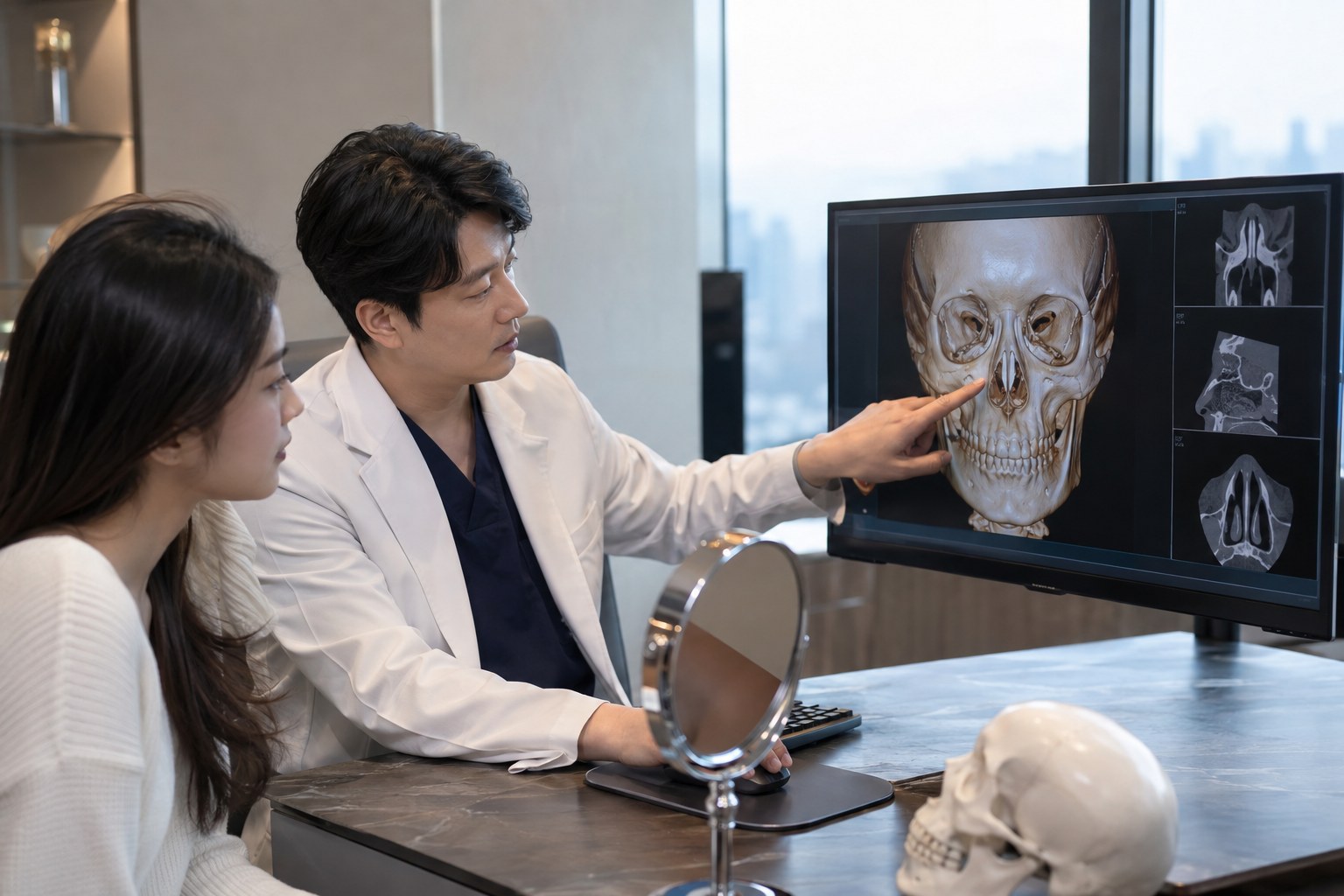
Unlike a first surgery, revision involves many variables — scar tissue, cartilage loss, changes in skin thickness. ANSWER closely reviews your surgical history and current tissue condition, then designs an individual combination of implant and autologous tissue suited to your remaining cartilage and skin.
- 1Plan established after reviewing prior surgery and implant type
- 2Surgical timing judged by degree of contracture and skin softening
- 3Materials chosen to match the remaining septal and ear cartilage
ANSWER POINT
Stable correction centered on autologous tissue
In revision surgery, lowering the chance of inflammation and recurrent contracture matters most. ANSWER uses autologous cartilage for the tip whenever possible and rebuilds the damaged support structure, aiming for long-term stability. Depending on tissue condition, we also consider rib cartilage.
- 1Autologous tip cartilage to reduce the risk of recurrent contracture
- 2Weakened support structure rebuilt before reshaping
- 3Staged surgical plans considered for cases with prior inflammation
- 4Conservative dissection that respects skin condition

ANSWER Revision: How It's Done
Detailed Consultation & Diagnosis
We review your surgical history and sources of dissatisfaction, and assess the internal support structure and skin.
Revision Planning
Remaining cartilage, degree of contracture, and your desired image together determine materials and scope.
Clearing the Existing Structure
The problematic implant and scar tissue are removed, and the deformed cartilage framework is assessed.
Rebuilding Support & Correction
Autologous tissue re-establishes the tip support, and the bridge and tip line are corrected.
Recovery Care
We monitor swelling and inflammation at regular intervals and guide recovery specific to revision surgery.
Frequently Asked Questions
QHow long after the first surgery can I have a revision?
In general, a revision is considered after 6 months, once the tissue has stabilized. However, when inflammation is present or contracture progresses quickly, earlier intervention may be needed, so timing is judged individually based on your condition.
QDoes revision always require rib cartilage?
Not every revision needs rib cartilage. If sufficient septal or ear cartilage remains, we use it first; rib cartilage is considered only when cartilage is lacking or contracture is severe.
QCould contracture occur again after revision?
The possibility of recurrent contracture cannot be ruled out entirely, but we aim to reduce the risk through autologous tissue, inflammation control, and a conservative height design. Regular follow-up observation continues after surgery.
Ask ANSWER about Revision
ANSWER Plastic Surgery 02.6959.4881 | Weekdays AM 10:00 - PM 07:00
The content on this page is provided for medical information purposes. Surgical methods and results may vary depending on individual conditions. All surgery carries the possibility of side effects, so please decide only after a thorough consultation with your doctor.